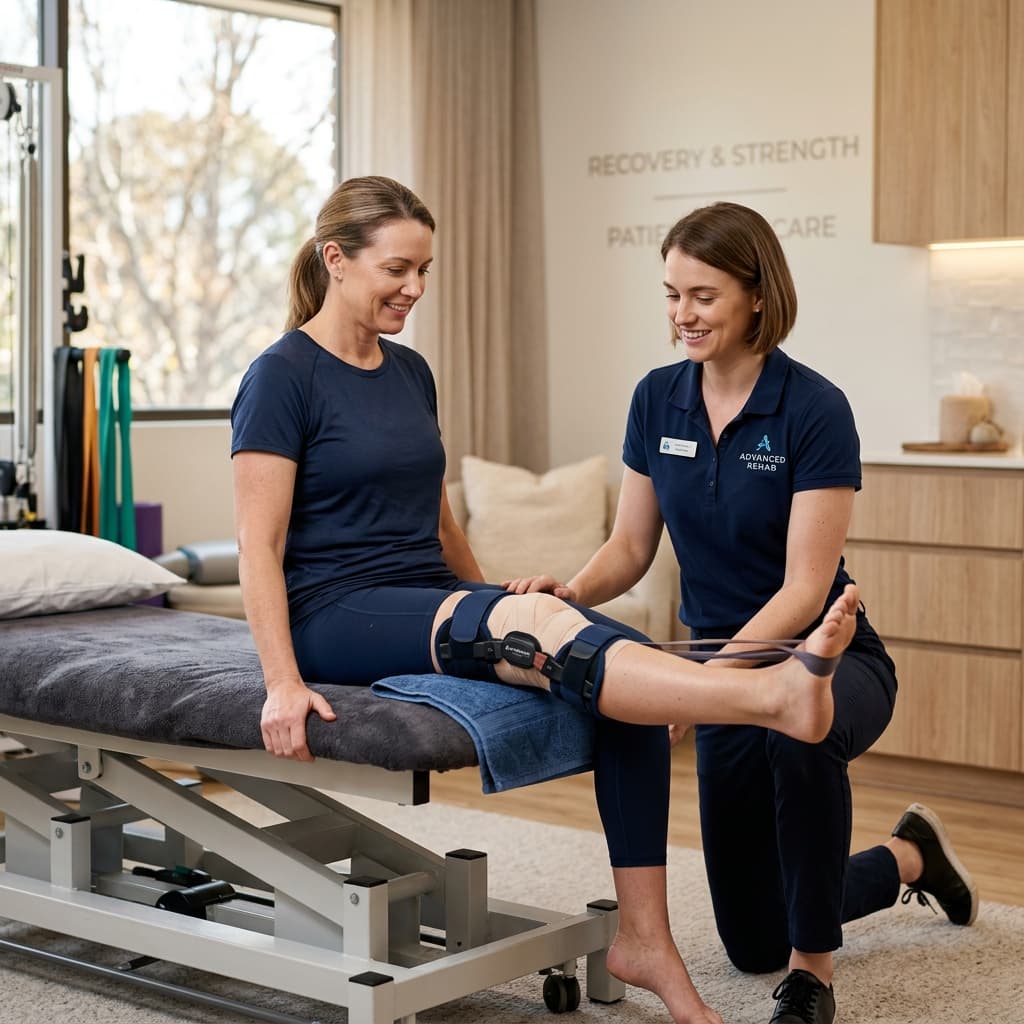
Physiotherapy after a knee replacement starts almost straight away, usually on the day of surgery or the day after, while you are still in hospital. Home physiotherapy then carries on from there, so there is no gap in your rehab once you leave the ward. Your surgeon's and hospital team's instructions always come first, and this guide explains what to expect and when extra help at home makes sense.
If you are about to have a knee replacement, or you are looking after someone who is, the question is rarely "should I do physio?" It is "what happens in the first few days, and who will be helping me once I am home?" Let's walk through it.
When does physiotherapy start after a knee replacement?
In hospital, a physiotherapist or occupational therapist usually sees you within the first day. NICE guidance on joint replacement says people who have a planned hip, knee or shoulder replacement should be offered rehabilitation within 24 hours of surgery. That includes help with getting moving, advice for everyday tasks and a home exercise programme.
Before you leave hospital, the same guidance says you should be given advice on self-directed rehabilitation, which means exercises you can do yourself at home.
Here is a typical picture. Everyone is different, and your own surgeon's plan is the one to follow.
| Stage | What usually happens |
|---|---|
| Day of surgery or day after | Physio or occupational therapist helps you stand, take first steps with a frame or crutches and start gentle exercises |
| Days 2 to 4 | You practise walking, getting in and out of bed, and often stairs, before going home |
| First 2 weeks at home | Daily home exercises, short regular walks, managing swelling and pain |
| Weeks 2 to 6 | Walking further, building knee bend and strength, more independence |
| Weeks 6 to 12 | Strengthening, balance work, returning to everyday activities |
| 3 months onwards | Gradual return to hobbies and, for many people, to normal routines |
These are typical ranges, not deadlines. Some people go home the day after surgery. Others stay longer.
Why a gap in physiotherapy matters
A new knee needs to be moved. After surgery the joint is swollen, sore and protected by tight muscles, and it naturally wants to stay still. If it stays still for too long, it can get stiff and weak, which makes later rehab harder.
Waiting times for NHS community or outpatient physiotherapy differ from area to area. Before you leave the ward, ask:
- Will I have a physiotherapy appointment, and when?
- Will someone visit me at home, or do I need to travel?
- What should I do if I have no appointment yet?
If there is a gap, a home physiotherapist can step in. Our guide to home versus clinic physiotherapy after knee replacement compares the options.
Your first week at home
Most hospitals give you a leaflet with your exercises. Follow that first. Typical early exercises include:
- Ankle pumps: move your feet up and down, around 10 times every hour while awake. This keeps your blood moving.
- Thigh squeezes (static quads): lie or sit with your leg straight, tighten the thigh muscle, press the back of the knee down and hold for 5 seconds.
- Heel slides: slide your heel towards your bottom to bend the knee, then straighten it again.
- Seated knee straightening: sit on a firm chair and slowly straighten the knee, hold briefly, then lower.
- Short walks: a few minutes around the house every hour or two, using the walking aid you were given.
Good habits for week one:
- Take painkillers regularly as prescribed, especially before exercises. Pain stops people moving.
- Rest with your leg up for part of the day to help swelling, but do not stay in bed or a chair all day.
- Check your wound daily, or ask someone to check it.
- Aim to get your knee as straight as possible. Many surgeons also look for the knee to bend to around 90 degrees within the first couple of weeks, but ask your own team for your personal targets.
Our guide to the most critical exercises for the first 14 days after knee replacement has more detail, and managing swelling after knee or hip replacement explains how to look after the joint between sessions.
When should home physiotherapy begin?
There is no single right date, but these are sensible guidelines:
- Ideally, arrange it before surgery. Knowing who will help you at home removes a lot of worry. NICE advises that people having a hip or knee replacement should get advice on rehabilitation before surgery too, including exercises to do before and after.
- Start in the first week home if you are struggling with pain, swelling, getting around or confidence.
- Start sooner if you live alone, have stairs to manage, have other health conditions, or feel unsure about your exercises.
- Follow your surgeon. If your surgeon has set a particular plan, such as limits on bending or weight-bearing, a home physiotherapist works within that plan.
What happens at a first home visit?
A home physiotherapist starts by listening: how the surgery went, how you are feeling and what you want to get back to. Then they typically:
- Check your wound, swelling, knee straightening and bending, and muscle strength
- Watch you walk, get up from a chair and use the stairs
- Look at how safe your home is, such as the bed, bathroom, toilet height and rugs
- Check your walking aid is the right height and being used well
- Agree a clear exercise plan with realistic goals
If you have steps or stairs, read how to navigate stairs safely after a hip or knee replacement. Many people also want to know about driving after a hip or knee replacement as they get stronger.
Warning signs: when to get help
Contact your surgical team, GP or NHS 111 if you notice:
- Redness, heat, swelling or leaking around the wound, or a high temperature
- Pain that is getting worse instead of better, or is not eased by your painkillers
- A calf that is swollen, hot, red or very painful. The NHS lists these as signs of a blood clot (DVT)
Call 999 or go to A&E if you have sudden chest pain, trouble breathing or you cough up blood. These can be signs of a clot in the lung.
Will the physiotherapist cause pain?
Some discomfort is normal when you stretch or strengthen a new knee, but sharp or rapidly increasing pain is not. A good physiotherapist adjusts the work to what your knee can manage that day. Always tell them if something hurts more than expected.
Want help at home after your operation? Book a post-surgical home assessment. The cost is £90 for 60 minutes, and no GP referral is needed.
This guide is general information, not personal medical advice. Always follow the instructions from your surgeon and hospital team.
Frequently Asked Questions
Physiotherapy usually begins in hospital on the day of surgery or the day after. NICE guidance says rehabilitation should be offered within 24 hours of a planned knee replacement. Home physiotherapy then continues once you are discharged, following your surgeon's plan.
Yes. Exercise and walking are a core part of recovery because they help you regain knee movement, strength and confidence. Your hospital team will give you a programme, and a physiotherapist can adjust it and keep you on track.
Yes, in most cases. Many people start home physiotherapy within their first week back, particularly if there is a gap before an NHS appointment, but the right timing depends on you and your surgeon's advice.
Some swelling, warmth and stiffness are common for weeks after surgery, especially after exercise. Rest, elevation and regular gentle movement help. Contact your surgical team if swelling gets worse, your calf is painful, or the wound looks infected.
Often, yes. Preparing with exercises before surgery, sometimes called prehabilitation, can help you feel stronger going in. Ask your surgical team which exercises suit your knee.