In your own homeA room-by-room look at keeping a home safe to move around
At the first visit we walk through the home with the person, looking at how they really move. These are the six places we check most, and what usually helps.
Hallway and front door
What we look for
Loose mats, poor lighting, a step at the threshold, and how the person manages the door and keys.
What usually helps
Fixing or removing mats, brighter bulbs and night lights, a sturdy rail where there is a step, and practising stepping up and down the threshold.
Stairs
What we look for
A handrail on each side, lighting, worn carpet, and whether the person uses the rail, rests on the way or leans on the wall.
What usually helps
Rails where they are missing, a clear way of climbing (one step at a time if needed), and leg strengthening so the stairs feel less of an effort.
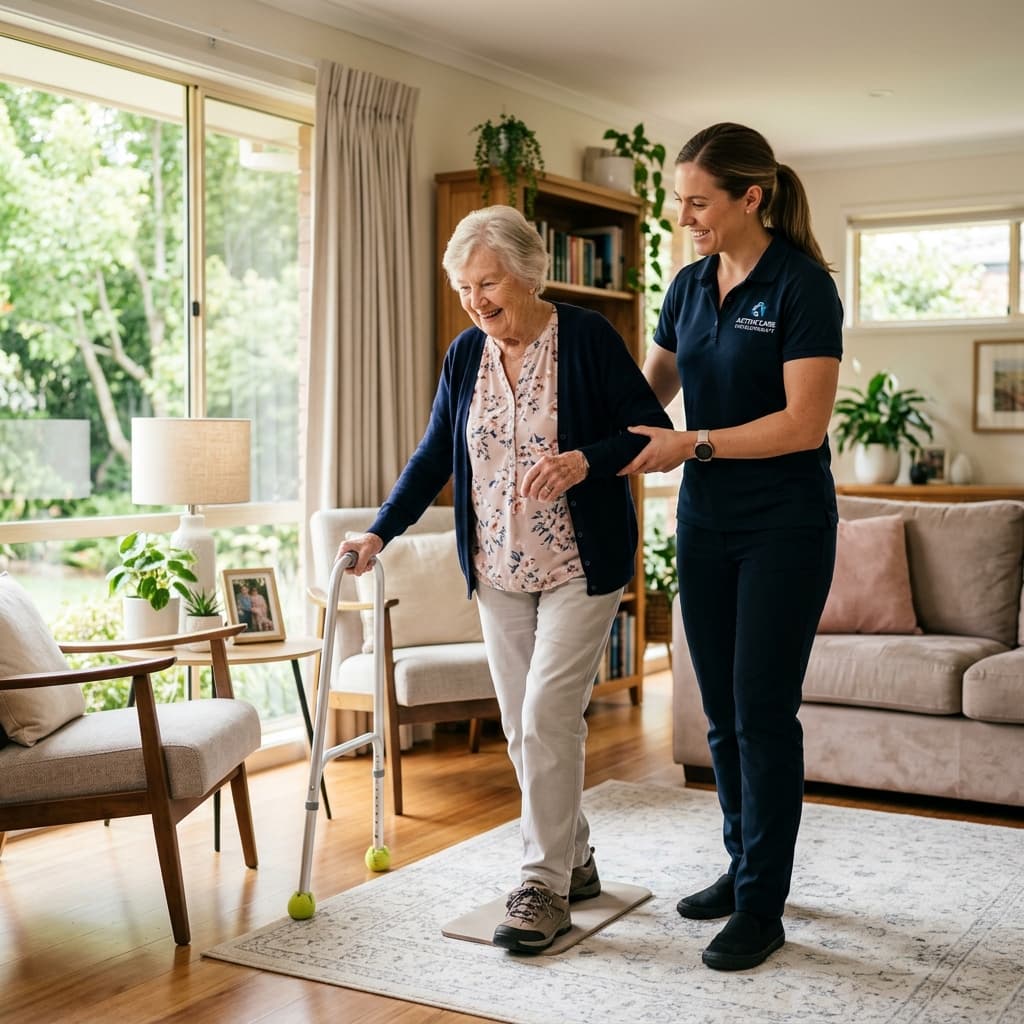
Living room
What we look for
Low or deep chairs, cluttered walkways, trailing cables, and how the person stands up and sits down.
What usually helps
A seat that suits the person’s height, clear walking routes, and practice at standing up without pushing on the arms.
Bathroom
What we look for
Wet floors, getting in and out of the bath or shower, the height of the toilet, and where the person grabs for support.
What usually helps
Non-slip mats, advice on rails, a raised toilet seat or a shower seat, and signposting to occupational therapy for fitted equipment.
Bedroom
What we look for
Getting in and out of bed, night-time trips to the bathroom, lighting, and what is on the floor.
What usually helps
A light within reach, a clear path to the bathroom, and a routine of sitting on the edge of the bed for a moment before standing.
Kitchen
What we look for
Reaching high shelves, standing for long periods, and carrying hot drinks or plates.
What usually helps
Moving everyday items to waist height, sitting down for food preparation, and practising reaching and bending safely.