Rehalign At-Home Physiotherapy
  • Home
  • About
  • Services
    • Neuro RehabilitationStroke, Parkinson's, MS and brain injury
    • Elderly RehabilitationFalls prevention, balance and strength
    • Orthopaedic & Post-Surgical RehabHip, knee, spine and fracture recovery
    • Musculoskeletal PhysiotherapyBack, neck, joint pain and arthritis
    • All services →
  • Pricing
  • Locations
  • Blog
  • Contact
Book Visit
  1. Home
  2. /
  3. Services
  4. /
  5. Musculoskeletal Physiotherapy
Musculoskeletal Physiotherapy

Physiotherapy at home for back, neck and joint pain

Pain that limits how you move is hard to ignore and harder to fix by guessing. We assess you properly at home, tell you in plain language what we think is going on, and treat it with hands-on techniques and the exercise that national guidance puts at the centre of recovery.

  • No GP referral needed
  • Travel included
  • HCPC-registered physiotherapists
  • £90 first assessment
Book a home assessment£90 · 60 minutes · travel included
Call +44 7450 092175

Where does it hurt?

1234567
  1. 1Neck
  2. 2Shoulder
  3. 3Elbow, wrist and hand
  4. 4Back and sciatica
  5. 5Hip
  6. 6Knee
  7. 7Ankle and foot

Not sure which fits? Start here.

The short answer

What does musculoskeletal physiotherapy at home involve?

A physiotherapist assesses your pain and how you move, explains what is likely causing it, and treats it with hands-on techniques, targeted exercise and advice on staying active. NICE guidance puts exercise at the centre of managing back pain and osteoarthritis, so most programmes combine treatment in the session with exercises you continue at home.

By body region

Where does it hurt? Start with the region

Pick the area that bothers you most. Each card shows what we commonly see there, what we check, and how we treat it. Many people have more than one sore area, and we look at the whole picture.

1

Neck

  • Stiff neck
  • Neck pain with headaches
  • Arm pain from an irritated nerve

What we assess

Neck movement, posture, any nerve symptoms into the arm, and how your work and sleeping positions load the neck.

What treatment involves

Gentle mobilisation and soft-tissue techniques, strengthening for the neck and shoulder blades, and practical advice on desk set-up and sleeping.

2

Shoulder

  • Rotator cuff pain
  • Frozen shoulder
  • Impingement

What we assess

Range of movement, strength of the rotator cuff and shoulder blade muscles, and the movements that bring the pain on.

What treatment involves

Pain-settling techniques, graded exercise for the rotator cuff and shoulder blade, and advice on activity so you keep moving without aggravating it.

3

Elbow, wrist and hand

  • Tennis or golfer's elbow
  • Carpal tunnel symptoms
  • Wrist tendon pain

What we assess

Grip, wrist and elbow movement, nerve symptoms, and the tasks that provoke the pain, from typing to gardening.

What treatment involves

Load management, progressive tendon-loading exercises, nerve-gliding exercises where suitable, and advice on tools and work set-up.

4

Back and sciatica

  • Lower back pain
  • Sciatica
  • Stiffness after sitting
  • Disc-related pain

What we assess

Movement, strength, nerve function in the legs, and what eases or aggravates the pain. We also ask about red-flag symptoms, which we always take seriously.

What treatment involves

Hands-on techniques as part of a package that includes exercise, tailored movement and strengthening, and advice to keep moving, in line with NICE guidance.

5

Hip

  • Hip osteoarthritis
  • Pain on the outside of the hip
  • Groin strains

What we assess

Hip movement, strength around the hip and pelvis, your walking pattern and how you manage stairs.

What treatment involves

Strengthening and mobility exercise, pacing advice and, where useful, guidance on walking aids. For arthritis, a tailored exercise plan as NICE recommends.

6

Knee

  • Knee osteoarthritis
  • Kneecap pain
  • Ligament and cartilage injuries

What we assess

Swelling, movement, strength of the thigh and calf, balance, and how the knee behaves on stairs and slopes.

What treatment involves

Graded strengthening and balance work, advice on loading and swelling and, for osteoarthritis, regular tailored exercise.

7

Ankle and foot

  • Ankle sprains
  • Achilles tendon pain
  • Heel pain

What we assess

Range of movement, calf and foot strength, balance, footwear and how the foot loads when you walk.

What treatment involves

Progressive loading exercises, balance retraining after sprains, and advice on footwear and activity.

Is it recent, or has it stuck around?

The first step is working out which describes you. The approach is different for each.

Pain that started recently

  • We find out what happened and rule out anything serious
  • We settle the pain with gentle movement, hands-on techniques and positions that ease it
  • We keep you moving, because long periods of rest tend to slow recovery
  • We build up gradually towards normal activity, with a clear plan for flare-ups

Pain that has lasted months or keeps returning

  • We look at the whole picture: movement, strength, activity levels, sleep, stress and what you do all day
  • We build strength and fitness gradually, with exercise tailored to your abilities
  • We teach you ways to manage flare-ups yourself
  • We set goals around what you want to be able to do, not only around pain

If pain is severe, getting steadily worse, or comes with other symptoms such as fever, unexplained weight loss or night pain that does not ease, speak to your GP. The red-flag panel below explains what to look out for.

Inside a session

What a typical session combines

Most sessions mix four things. The balance between them depends on your condition and your preferences.

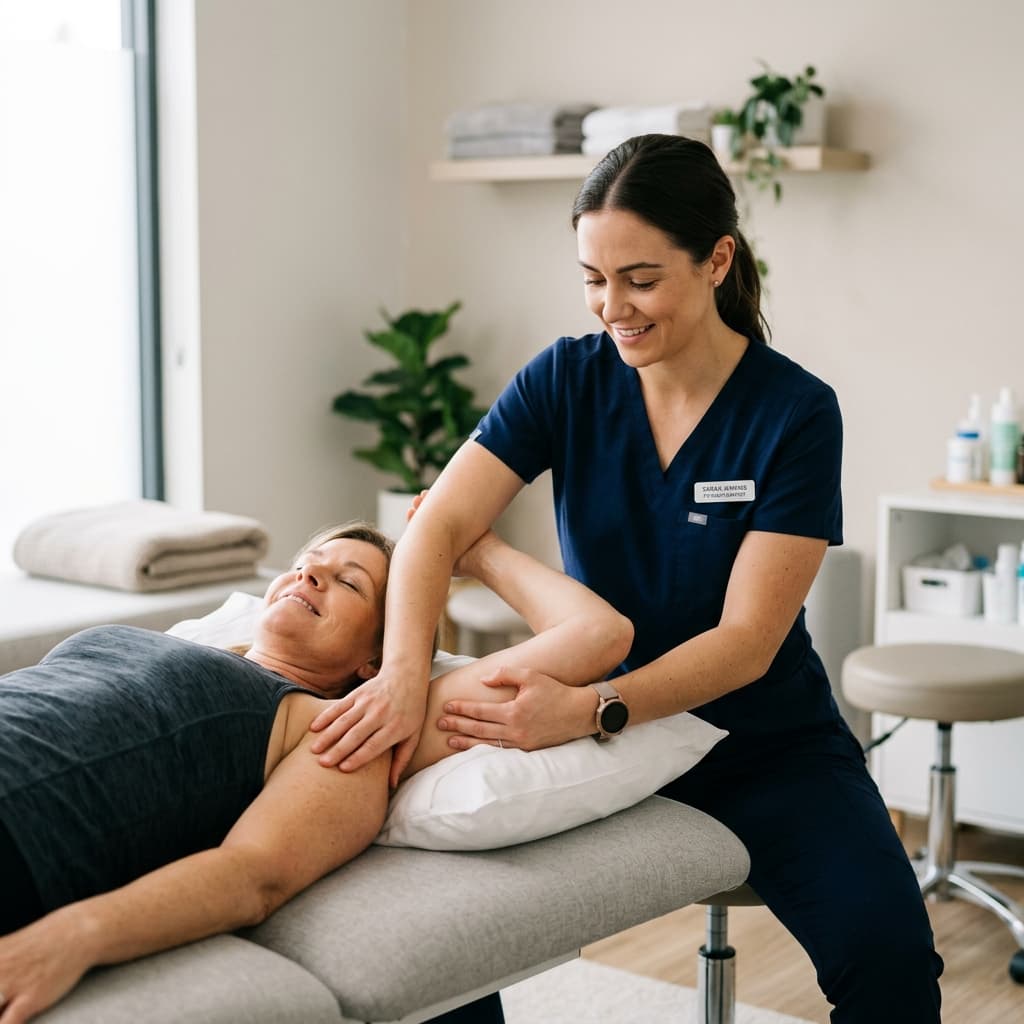
A physiotherapist gently moves a patient’s shoulder on a treatment couch during an assessment
A shoulder assessment on a treatment couch, at home.
  1. 01

    Assessment and explanation

    We re-check how you move, review progress since the last visit and explain what we are finding.

  2. 02

    Hands-on treatment

    Joint mobilisation, soft-tissue techniques and stretching, where they help.

  3. 03

    Exercise

    Specific strengthening, mobility and control exercises, shown and practised until you are confident to do them alone.

  4. 04

    Advice and self-management

    How to stay active, adjust daily tasks, handle flare-ups, and know when to progress.

NICE advises that manual therapy for low back pain should be used only as part of a package that includes exercise, so hands-on treatment is never the whole plan.

Back pain red flags: when not to wait for physiotherapy

Most back and joint pain is not serious and responds to movement and treatment. A few symptoms mean you should get medical help first. This is general information and does not replace advice from a doctor.

Go to A&E or call 999 now

  • Numbness or tingling around the genitals, buttocks or back passage
  • New difficulty passing urine or controlling your bladder or bowels, or loss of feeling when wiping
  • Weakness or numbness in both legs, or legs giving way
  • Severe pain after a fall, accident or blow, especially if you cannot move or the area looks deformed
  • Chest pain or pressure, especially with breathlessness or pain spreading to the arm or jaw

Speak to your GP or call NHS 111 promptly

  • Back pain with a fever, or when you feel generally unwell
  • Unexplained weight loss alongside ongoing back pain
  • Constant, severe pain that wakes you at night and does not ease when you change position
  • New back pain if you have had cancer before, or you take medicines that weaken your immune system
  • A hot, red, swollen joint
  • Pain that is getting steadily worse rather than better

More from the NHS: NHS information on cauda equina syndrome

Your first visit and what follows

Who it is for
Adults with back, neck, shoulder, hip, knee, ankle or other joint and soft-tissue pain, including arthritis and sports injuries.
First visit
A 60-minute assessment, £90.
Follow-up visits
45 minutes, £80 each.
Typical course
Often a handful of visits for a recent problem, and longer for a long-standing one. We give you an honest estimate at the end of the first visit.
Between visits
Exercises and self-management advice that you do yourself.
Referral
None needed. We tell you if a scan, GP review or specialist referral is a better next step.
Equipment
We bring what we need, including a treatment table where required. A clear space of about 2m by 2m is enough.
Guidance and evidence

What national guidance says about back pain and arthritis

The two NICE guidelines below shape how we treat most musculoskeletal problems. Each card links to the original.

  • NICE says manual therapy for low back pain, with or without sciatica, should be considered only as part of a treatment package that includes exercise, and that a group exercise programme can be considered for a flare-up.

    NICE guideline NG59: low back pain and sciatica in over 16s (opens in a new tab) ↗
  • NICE recommends that everyone with osteoarthritis is offered therapeutic exercise tailored to their needs, and that supervised sessions can be considered.

    NICE guideline NG226: osteoarthritis in over 16s (2022) (opens in a new tab) ↗
  • NICE advises telling people with osteoarthritis that joint pain may increase when they start therapeutic exercise, and that sticking with it brings greater long-term benefit for pain and function.

    NICE guideline NG226: osteoarthritis in over 16s (2022) (opens in a new tab) ↗
Questions people ask

Frequently asked questions

Do I need a scan before physiotherapy for back pain?

+
Not usually. Most back pain is diagnosed from your history and an examination, and scans often show age-related changes that do not explain the pain. We will tell you if we think a scan, blood test or specialist opinion is needed.

How many sessions will I need?

+
It depends on the problem and how long you have had it. We give you an honest estimate at the end of the first visit, and review it as you improve. If you improve faster than expected, we stop sooner, so you never pay for sessions you do not need.

Is exercise safe when I am in pain?

+
Usually yes, and it is a core part of treatment for back pain and osteoarthritis. NICE advises that joint pain may increase when people with osteoarthritis start exercising, and that sticking with it brings greater long-term benefit. We start at a level you can manage, progress gradually, and tell you which kinds of pain to expect and which to report.

Can you treat sciatica?

+
Yes. Sciatica is pain travelling down the leg, usually from an irritated nerve in the lower back. We look at what aggravates and eases it, treat it with movement and exercise, and tell you which symptoms need urgent attention. NICE guideline NG59 covers low back pain with or without sciatica.

Can physiotherapy help knee or hip osteoarthritis?

+
Yes. NICE recommends tailored therapeutic exercise for everyone with osteoarthritis, and supervised sessions can help people get started and keep going. We design a programme for your joint, your fitness and your goals, with advice on pacing and walking aids if they would help.

What should I do before my appointment?

+
Wear loose, comfortable clothing that lets us see and reach the sore area, and have any scan reports or hospital letters ready. A clear space of about 2m by 2m is enough, and we bring a treatment table if one is needed.

When should I see a GP or go to A&E instead?

+
Go to A&E or call 999 for numbness around the genitals or back passage, new bladder or bowel problems, weakness in both legs, or severe pain after an injury. See your GP promptly for back pain with a fever, unexplained weight loss, severe night pain or a hot, swollen joint. The red-flag panel above has the full list.

How much does musculoskeletal physiotherapy cost, and do I need a referral?

+
You do not need a GP referral. The assessment takes 60 minutes (£90) and each follow-up takes 45 minutes (£80), with travel included. Bundles of sessions lower the price per visit.
Clear and inclusive

Prices for back, neck and joint treatment

Travel is included in every price. If your problem has been around for a while, a bundle of sessions lowers the cost per visit.

ONE-OFF SESSION

Initial Clinical Assessment

£90

  • Full physical & functional assessment
  • Neurological & joint range testing
  • Safety & home environmental screening
  • Personalized rehabilitation pathway design
  • Same-day clinical report & goal planning
Book Initial Assessment
MOST REQUESTED
ONE-OFF SESSION

Standard Treatment Session

£80

  • Hands-on manual therapy & mobilizations
  • Supervised clinical exercise execution
  • Progress tracking & objective measures
  • Continuous home exercise plan adjustments
  • Direct coordination with your GP/consultant
Book Follow-Up Session
SESSION BUNDLE

5-Session Recovery Bundle

£380

£76/session • Save £20

  • 5x Follow-up sessions
  • Fully transferable between specialties
  • Dedicated primary clinician assignment
  • Printed progressive home exercise guides
  • Validity extended for 6 months
Purchase 5-Session Block
BEST VALUE
SESSION BUNDLE

10-Session Realign Block

£720

£72/session • Save £80

  • 10x Follow-up sessions
  • Priority scheduling for home visits
  • Dedicated backup clinician support
  • Advanced progress analysis report
  • Validity extended for 12 months
Purchase 10-Session Block
Payal Devgan, Senior Chartered Physiotherapist
Lead clinician for this service

Payal Devgan

Senior Chartered Physiotherapist · HCPC PH108630

Payal holds a Bachelor of Physiotherapy and a Level 3 leadership qualification from the University of Birmingham. She leads Rehalign’s home visits for musculoskeletal problems.

Every Rehalign physiotherapist is HCPC-registered. Meet the team.

Guides on back pain, arthritis and what to expect

Plain-English reading from our clinicians.

  • Managing Chronic Back Pain with Home Physiotherapy in the West Midlands

    Struggling with chronic lower back pain? Discover how targeted home physiotherapy for back pain in the West Midlands, including Birmingham and Solihull, restores mobility.

  • Managing Knee Osteoarthritis: At-Home Strength Training

    Discover how home-based strength training and low-impact exercise programs under Rehalign specialists relieve joint pain and manage knee osteoarthritis.

  • At-Home vs Clinic Physiotherapy: A Guide for West Midlands Patients

    Discover the benefits of home visit physiotherapy in the West Midlands compared to clinic visits. Learn how personalized at-home care enhances recovery.

  • First Home Visit: What to Expect in Your Physiotherapy Assessment

    What happens during your first at-home physiotherapy visit? We walk you through our initial clinical mobility and safety assessment process.

  • How Much Does Home Physiotherapy Cost? Prices, Bundles and What's Included

    Home physiotherapy costs £90 for the first assessment and £80 per session, with bundles from £72 a session. See what's included and how to save.

Browse all guides →

Musculoskeletal physiotherapy across the West Midlands

We treat patients at home in all of these towns, and in the postcodes around them.

  • Birmingham
  • Coventry
  • Smethwick
  • West Bromwich
  • Halesowen
  • Stourbridge
  • Aldridge
  • Willenhall

Not sure we reach you? Check your postcode on the locations page.

Get your pain looked at properly, at home

Book a first visit and leave with a clear explanation, a plan and the first steps to take.

Book a home assessment£90 · 60 minutes · travel included
Call +44 7450 092175

Check postcode coverage · See full pricing

Rehalign Footer Logo

Rehalign provides elite in-home physiotherapy across the West Midlands, combining clinical excellence with flexible schedules to support your rehabilitation.

Registered Private Limited Company: 16649377
Incorporated on 14 August 2025

Areas Covered

  • Walsall
  • Wolverhampton
  • Birmingham
  • Solihull
  • Coventry
  • Dudley
  • All 15 Towns →

Specialities

  • Neuro Rehabilitation
  • Elderly Rehabilitation
  • Post-Surgical Rehab
  • Musculoskeletal Physio
  • Stroke Rehabilitation
  • Hip & Knee Replacement
  • Falls Prevention
  • Insurance & Billing
  • FAQ — Common Questions

Stay Aligned

Join our newsletter for monthly clinical mobility guides and exercises.

Contact Clinical Desk

+44 7450 092175 / +44 7574 020868
contact@rehalign.com
West Midlands, UK
Find us on Google Maps →

© 2026 Rehalign Private Limited. All Rights Reserved. Fully insured and registered with HCPC & CSP.

Privacy PolicyTerms of ServiceCancellation Policy