Can Strength Training in Your 80s Really Improve Mobility?
Yes — and the evidence for this is genuinely strong, not just encouraging in a general sense. Research has shown meaningful strength gains from resistance training even in frail nursing home residents in their 90s, and systematic reviews of trials in older adults consistently find significant improvements in grip strength, gait speed, and chair-stand performance — all direct measures of everyday mobility. Muscle tissue retains the ability to respond and adapt to resistance training throughout life; age changes how a programme should be built and supervised, not whether it can work at all.
Why It's Never "Too Late" — The Physiology
Age-related muscle loss (sarcopenia) is real and progressive — muscle mass declines by roughly 3–8% per decade after age 40, with the rate accelerating notably after 65. Left unaddressed, this drives a genuinely difficult cycle: reduced strength leads to reduced activity, which accelerates further muscle loss, increasing fall risk and reducing independence in everyday tasks like climbing stairs or carrying groceries.
The encouraging part is that this process isn't a one-way street with age as an absolute barrier. Skeletal muscle retains the capacity to respond to resistance training — building strength through the same basic mechanism (mechanical tension driving muscle protein synthesis) — at any age, including advanced old age. What changes with age isn't whether the muscle can adapt, but how a training programme needs to be structured, dosed and supervised to do so safely.
What the Evidence Actually Shows
This isn't a fringe or speculative claim — it's backed by a genuinely substantial body of research:
- One of the most striking findings in this area comes from studies of institutionalised, frail nonagenarians — nursing home residents in their 90s — where structured resistance and muscle power training produced measurable improvements in muscle mass, power output, and functional outcomes, even in a population usually assumed to be past the point of meaningful physical improvement.
- A recent systematic review and meta-analysis covering 24 randomised controlled trials and nearly 1,000 older adults with sarcopenia found resistance training produced statistically significant improvements in handgrip strength, gait speed, knee extension strength, and Timed Up and Go performance — a standard clinical measure of mobility and fall risk.
An honest caveat worth including: not every outcome improves equally reliably. Some broader reviews note that while strength gains are consistently well-supported, improvements in muscle size and certain mobility measures are somewhat less pronounced and more variable across studies, partly due to differences in study quality and design. The overall picture remains genuinely positive — strength training works, and it moves the needle on real functional measures — but it isn't an overnight transformation, and results vary between individuals.
What This Looks Like in Practice at This Age
Effective programmes for adults in their 80s and 90s share a few common features, distinct from a younger adult's gym routine:
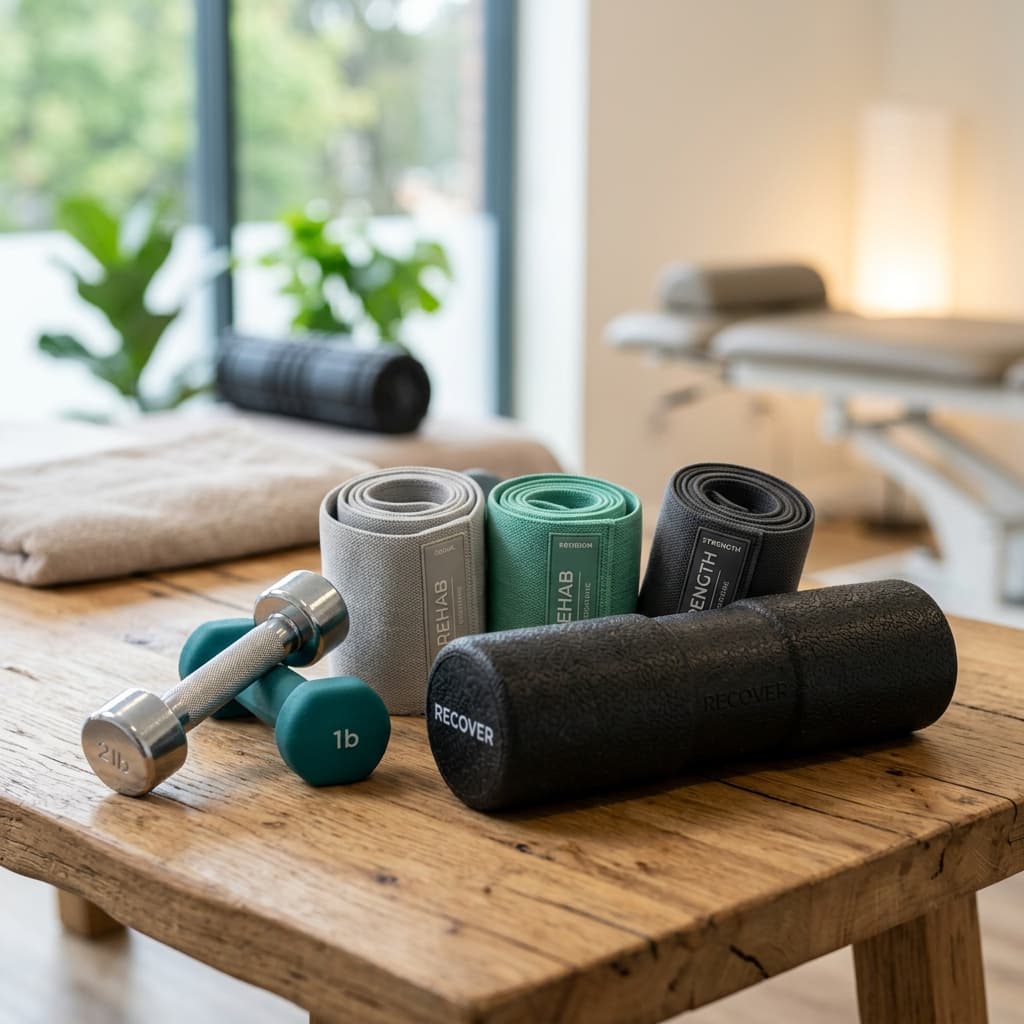
- Progressive, not maximal. Starting with body weight, resistance bands, or light weights and gradually increasing difficulty over weeks — not attempting heavy loads early on.
- Functional movements. Sit-to-stand from a chair, step-ups, and similar movements that directly translate to daily tasks tend to produce the most meaningful real-world improvement, alongside more traditional strengthening exercises.
- A multicomponent approach. The strongest results in research tend to come from programmes combining strength training with balance and power-focused work (movements performed with a bit of speed and control, not just slow strength work), rather than strength training in isolation.
- Consistency over intensity. Research suggests roughly two to three sessions a week, sustained over several weeks to months, produces meaningfully better results than sporadic, harder sessions.
Safety Considerations at This Age
Starting resistance training later in life, particularly in the 80s and beyond, generally benefits from professional guidance rather than a self-directed programme — not because the training itself is inherently risky when done properly, but because comorbidities (heart conditions, joint issues, osteoporosis, balance problems) become more common with age and should shape how a programme is built. A physiotherapist can assess current health, current strength and balance, and any relevant medical history, then build a programme that progresses safely rather than applying a generic template.
Realistic Expectations
Strength training in your 80s won't reverse decades of muscle loss in a few weeks, and results vary by starting point, health status, and consistency. What the evidence does support is genuinely meaningful, clinically relevant improvement — measurable gains in strength and functional tests, often translating to real differences in daily life: getting up from a chair more easily, managing stairs with more confidence, and a reduced fall risk. For many people, that's a substantial and worthwhile return for a modest, well-guided time investment.
Rehalign provides home visit physiotherapy for older adults across the West Midlands, including Birmingham, Solihull, Coventry, Walsall, Wolverhampton and Dudley — including personalised strength and balance programmes built around your current ability and health, delivered in your own home. Book a strength and mobility assessment or get in touch to find out what a safe starting point looks like for you.
Frequently Asked Questions
No — research specifically including frail adults in their 90s has shown meaningful improvements in strength and functional outcomes. Starting later means the programme needs careful, individualised design, not that meaningful benefit is off the table.
Many studies show measurable improvements in strength and functional tests (like grip strength and Timed Up and Go performance) within a period of weeks to a few months of consistent training, though individual results vary based on starting health and consistency.
No — many effective programmes for this age group use body weight, resistance bands, or light hand weights rather than gym equipment, and can be done entirely at home with appropriate guidance.
Often yes, but it should be guided by a professional who can account for specific conditions when designing the programme — this is exactly why supervised, individually tailored strength training is recommended over a generic online programme at this age.