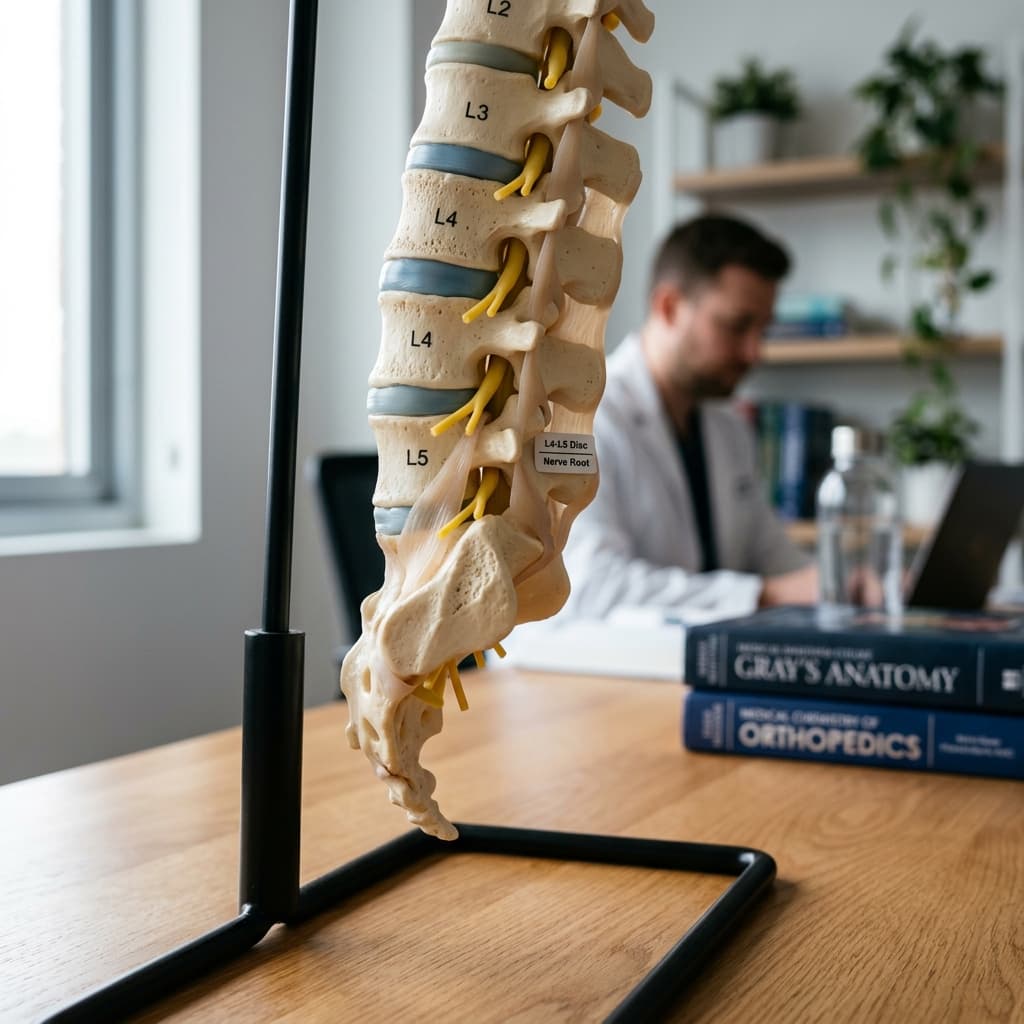
To get out of bed with back pain, bend your knees, roll onto your side in one piece, let your legs drop over the edge and push up with your arms. Then sit for a moment before you stand. This is called the log-roll, and it helps your back avoid twisting or bending sharply as you move.
Back pain in the morning is common, and it is often not serious. This guide is for general aches and stiffness. Please read the red-flag box below first if you have any worrying symptoms. 16 October is World Spine Day, a good day to give your back some attention.
Why back pain is often worse in the morning
Lower back pain in the morning has several common causes. They often work together:
- Stiffness after staying still. Joints and muscles can feel stiff after hours without much movement. Many people find it eases once they get moving.
- Sleeping position. Lying curled up, twisted or on your stomach for hours can leave your back feeling sore when you wake.
- Your bed. An old, sagging or uncomfortable mattress, or pillows that do not suit you, may add to the problem for some people. We look at this more below.
- Getting up too fast. Your back muscles have not warmed up yet, so a sudden twist or lunge out of bed can set the pain off.
- Poor sleep and stress. Being tired or tense can make pain feel stronger.
Stiffness that settles once you are up and moving is very common. The NHS advises staying active and carrying on with normal activities as far as you can. NICE guidance for low back pain recommends exercise as part of care (NICE NG59).
The log-roll: step-by-step instructions
Go slowly. Breathe out as you move, and do not hold your breath.
- Lie on your back. Bend both knees and keep your feet flat on the bed.
- Shuffle to the edge. Move your hips, then your shoulders, towards the side of the bed you will get out of. Use small steps.
- Cross your arms over your chest. You can hold a small pillow if that feels better.
- Gently tighten your lower tummy. Imagine lightly drawing your belly button towards your spine. Keep breathing.
- Roll onto your side as one piece. Turn your head, shoulders, hips and knees together, like a log. Keep your knees together and bent. Try not to twist your middle.
- Let your legs drop over the edge. As they go down, push up with your bottom elbow and your top hand. The weight of your legs helps lift your body.
- Sit on the edge of the bed. Put your feet flat on the floor, about hip-width apart. Take a few slow breaths. This also helps if you feel dizzy on sitting up.
- Stand up in a smooth movement. Shuffle forward, put your hands on the bed or a firm support, lean forward from your hips and push up through your legs. Stand tall, then pause before you walk.
A few extra tips:
- Keep a walking stick or frame within reach if you use one.
- If you have had a hip or spinal operation, follow your surgeon's instructions. They come first.
- If you feel light-headed, stay seated until it passes. Balance and dizziness can change with age, and our guide on why balance worsens with age explains what can help.
Getting back into bed safely
Getting into bed uses the same idea in reverse.
- Sit down on the edge of the bed. Sit near the middle, with your bottom well back.
- Lower yourself onto your side. Lean on your elbow and forearm as you go down. Do not drop onto your back.
- Lift your legs onto the bed. Bend your knees and bring both legs up together as your upper body goes down.
- Roll onto your back or side. Move your shoulders, hips and knees as one piece. Do not twist.
- Get comfortable. A pillow between your knees (on your side) or under your knees (on your back) suits some people. Choose what feels best.
3–4 gentle in-bed movements before getting up
You may like to loosen up for a few minutes before you get up. Move slowly and stay in a comfortable range. Mild stiffness is fine. Stop if you get sharp pain, pins and needles, or pain that travels down your leg. These movements will not suit everyone.
- Ankle pumps. Lying on your back, pull your toes towards you, then point them away. Repeat about ten times. This gets your legs moving.
- Knee rolls. Bend your knees with your feet flat. Let both knees fall gently to one side, then back to the middle, then to the other side. Keep the movement small. Repeat five to ten times each way.
- Pelvic tilts. With your knees bent, gently tighten your tummy and tilt your pelvis so your lower back presses lightly into the bed. Hold for a few seconds, then relax. Repeat five to ten times.
- Knee to chest, with care. Hold behind one thigh, not over the knee, and gently draw it towards your chest. Hold briefly and lower it slowly. Then do the other leg. Skip this if you have had a hip replacement, if your surgeon has told you to avoid bending your hip, or if it makes your pain worse.
Mattress and pillow myths
- "A firm mattress is always best." There is no single best mattress for everyone. A sensible guide is what feels comfortable and supportive to you.
- "I need an expensive orthopaedic mattress." A high price does not guarantee a better night. If your mattress is very old, sagging or uncomfortable, a replacement may be worth trying.
- "There is one right way to sleep." There is no single best position. Change position if one becomes uncomfortable.
- "Morning pain means my back is damaged." Stiffness is common and does not usually mean harm.
- "Resting in bed is the best treatment." Long spells of rest tend to leave your back stiffer. The NHS advises keeping as active as you can.
Daytime habits that help mornings
- Keep moving. Little and often works well. Short walks and everyday tasks count.
- Break up long sitting. Stand up, walk around or stretch every so often.
- Build strength gently. Regular exercise that suits you is recommended for back pain by NICE. Our guide on managing chronic back pain has more ideas.
- Try warmth. Some people find a warm shower or a heat pack eases morning stiffness. It is about comfort, not a cure.
- Look after your sleep. A regular bedtime and a calm evening can help you wake less tense.
⚠️ Red flags: get urgent help if
Most back pain is not serious. But get medical help straight away if you have back pain and any of these:
Go to A&E or call 999 now if you have:
- Numbness or tingling around your genitals, buttocks or back passage
- New problems passing urine or controlling your bladder or bowels
- Weakness or numbness in your legs, or your legs giving way
- Severe pain after a fall or injury, especially if you cannot move or the area looks out of shape
Call NHS 111 or speak to your GP promptly if you have:
- Back pain with a fever, or you feel generally unwell
- Unexplained weight loss
- Constant, severe pain that wakes you at night and does not ease when you change position
Read more on the NHS back pain page. This is general information and does not replace medical advice.
When to see a physiotherapist
Consider seeing a physiotherapist if your morning back pain:
- keeps coming back or is not improving after a few weeks,
- stops you doing things you enjoy,
- makes you nervous about moving, or
- is getting in the way of sleep.
A physiotherapist will ask about your pain, check how you move and explain what they think is going on. They can show you exercises that suit you. NICE says hands-on treatment should only be offered as part of a package that includes exercise (NICE NG59), so exercise is almost always part of the plan.
Tell your GP if your morning stiffness is long-lasting and eases with movement rather than rest, especially if you are younger. Your GP can check whether it has an inflammatory cause. The NHS explains more on its ankylosing spondylitis page.
Rehalign provides private physiotherapy at home across Birmingham, Solihull, Walsall, Wolverhampton, Coventry, Dudley and Telford. You do not need a GP referral. Your first visit is a 60-minute assessment at £90, with travel included. You can read more about musculoskeletal physiotherapy at home.
Frequently Asked Questions
Lower back pain in the morning is often down to stiffness after lying still, your sleeping position and getting up too quickly. It usually eases once you start moving. If it is severe, new, or comes with the red-flag symptoms above, get medical advice.
Usually not. Short rests are fine, but long periods in bed tend to make your back stiffer. The NHS advises keeping as active as you can. Gentle walking and the movements above are good places to start.
Gentle movements such as knee rolls and pelvic tilts are a good start. Keep them small and slow, and stop if you feel sharp pain or symptoms travelling down your leg. Never force a stretch.
Not necessarily. Many things affect morning pain, and a mattress is only one of them. If yours is old or uncomfortable, a new one may help you sleep better.
Get urgent help for numbness around the genitals or buttocks, new bladder or bowel problems, leg weakness, or pain after a fall or injury. Also seek advice for back pain with fever or unexplained weight loss. Use NHS 111 if you are unsure.