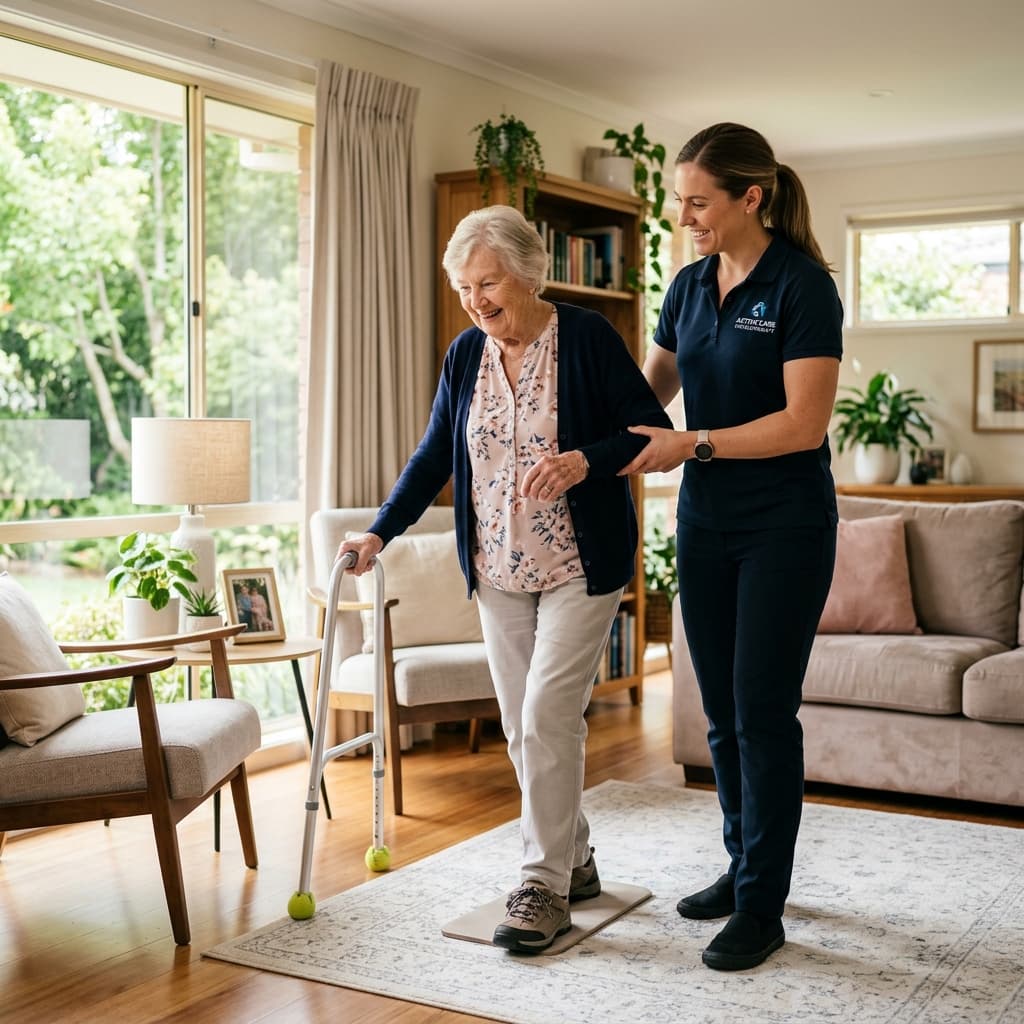
The most useful home changes after a stroke are usually in the bathroom, on the stairs and steps, in the living areas, in the bedroom and in the kitchen. Small, low-cost changes such as grab rails, better lighting and a clear floor often make the biggest difference, while larger changes such as a stair lift or a wet room may need an occupational therapist's assessment and, for some people, a council grant. This guide takes you through five areas and what to do first. Your stroke team and occupational therapist know your needs best, so follow their advice.
A stroke can affect strength, balance, vision, thinking and communication, all at once. The best home set-up depends on how your stroke has affected you. It also changes over time, so what you need in week one may be different from what you need in month six.
Before you start: get the right advice
- Ask for an occupational therapy (OT) assessment. OTs look at how you manage daily tasks and recommend equipment and changes. Ask your hospital stroke team or your GP surgery. Some people are seen in hospital before discharge, and others at home afterwards.
- Go through the home with your physiotherapist or OT. A home visit lets them see the real stairs, doorways and bathroom.
- Do not over-adapt too early. Some equipment helps in the early days and is not needed later. Do not make permanent changes until you know how recovery is going, unless safety demands it.
- Think about the weaker side. If one side is weak, rails, switches and furniture should work with that, not against it.
1. The bathroom and toilet
The bathroom is where many falls happen, because floors are wet and surfaces are hard.
- Grab rails by the toilet, bath and shower. They must be fixed to the wall properly, and towel rails are not strong enough.
- A raised toilet seat or toilet frame if getting up is hard.
- A shower seat or stool so you can wash sitting down, and a hand-held shower head.
- A non-slip mat inside the bath or shower, and outside it.
- A bath board or bath lift if you use the bath, as advised by an OT.
- A level-access shower or wet room is a bigger change that may be worth planning for the longer term.
Keep toiletries within easy reach, and consider a lighter, non-glass set of items.
2. Stairs, steps and entrances
Stairs are a big concern for many families. Our article on home set-up for stairs after joint replacement has ideas that also suit stroke, including rails, lighting and a ground-floor base.
- Secure handrails on both sides if possible. After a stroke, you may need to hold the rail with your stronger hand, whether you are going up or down, so a rail on each side helps.
- A second rail or a rail on the outside steps at the front and back doors.
- Good lighting inside and outside, ideally with sensors.
- Contrasting colours on the step edges (a strip of bright tape) can help if your vision has changed.
- A ramp or half-step if the doorstep is a problem, particularly for wheelchair users.
- A key safe so carers and emergency services can get in.
- A stair lift may be recommended if stairs stay unsafe. If you cannot manage the stairs yet, setting up a bed and toilet downstairs is a common temporary solution.
3. Living areas
- Clear a path. Remove rugs, trailing wires, low tables and clutter so you can walk or wheel without obstacles.
- Choose a chair at the right height, with firm arms and a firm seat. A chair that is too low or too soft is hard to get out of. A physiotherapist can advise on raising it.
- Arrange furniture so you can move from one piece to the next and hold on if needed.
- Think about sight. After a stroke, some people lose part of their field of vision or have trouble noticing things on one side. Place the TV, phone and important items where they are easy to see, and gently encourage looking to the affected side. Ask the stroke team for advice if you notice this.
- Good lighting and plain, matt floors (no glare).
- Phone within reach at all times, or a pendant alarm. Keep important numbers written in large print.
4. The bedroom
- Check the bed height. You should be able to sit on the edge with your feet flat on the floor. A bed that is too low or too high makes getting up difficult.
- A bed lever or rail (if advised by an OT) helps with turning and getting out.
- A bedside commode or urinal if getting to the toilet at night is hard.
- Night lights along the route to the toilet.
- A clear space by the bed for walking aids and a safe turning area.
- A bedside table with water, glasses, phone and medicines.
Our guide to assessing fall risks in an elderly relative's home includes a room-by-room checklist that works well alongside this one.
5. The kitchen
Cooking and making drinks are important for independence, but they can be unsafe if one hand is weak or concentration is affected.
- Move everyday items to waist or shoulder height, so you do not need to bend or reach.
- A perching stool so you can sit while preparing food.
- One-handed aids such as a non-slip chopping board with spikes, a rocker knife, jar openers and lightweight plates and cups.
- A kettle tipper or a cordless kettle on a stable surface, or a hot-water dispenser, to avoid carrying heavy, hot items.
- A microwave at a safe height, if standing at the hob is risky.
- Turn off the gas or use auto shut-off devices if memory or concentration is affected.
- Keep the floor dry, and wipe spills immediately.
Don't forget the little things
- Footwear. Well-fitting shoes or slippers with a non-slip sole, a back and a secure fastening. See our guide on choosing the right footwear.
- Pets. Be careful with small dogs and cats under your feet.
- Smoke alarms and, if appropriate, a carbon monoxide alarm.
- Communication aids. If speech or understanding is affected, labels on cupboards and a simple picture chart can reduce frustration.
- Technology. Voice assistants and smart plugs can help you control lights, heating and calls hands-free.
Help with cost
- Disabled Facilities Grant (DFG). Councils in England can provide means-tested grants for adaptations that help you stay in your home, such as stair lifts, ramps and wet rooms. GOV.UK explains how it works. You usually need an OT assessment first, and the maximum has been £30,000, but your council can confirm the current limit. Birmingham and Solihull councils have pages explaining how to apply, and other councils in the West Midlands have their own.
- Equipment loans. Some simple equipment may be loaned through community equipment services. This varies between areas.
- Charities and benefits. The Stroke Association helpline on 0303 3033 100 can point you towards support, and your local council can check what benefits you may be entitled to.
How physiotherapy fits in
Home changes make life safer, but recovery still depends on movement and practice. A neurological physiotherapist can see how you move around your actual home and help decide which changes matter most. The NHS stroke recovery page explains how rehabilitation supports mobility and everyday tasks. Our guide on the first six weeks after a stroke shows how needs change.
Want a physiotherapist to look at your home and your recovery plan? Book a stroke rehabilitation home assessment. The cost is £90 for 60 minutes, and no GP referral is needed.
This guide is general information, not personal medical advice. Always follow the instructions from your stroke team and occupational therapist.
Frequently Asked Questions
Start with grab rails and a raised toilet seat or shower seat in the bathroom, secure handrails on stairs, a clear floor free of rugs and clutter, good lighting, and a bed and chair at the right height. An occupational therapist can tailor this to your needs.
An occupational therapist usually does, often arranged by the hospital stroke team, your GP or your local council's adult social care team. A physiotherapist can also advise on mobility and stairs.
Possibly. In England, councils can offer Disabled Facilities Grants towards adaptations like stair lifts, ramps and wet rooms. The grant is means-tested and usually needs an occupational therapy assessment.
It can be a sensible short-term step if stairs are unsafe, because it reduces risk while you build strength and balance. Ask your physiotherapist or occupational therapist how long to keep it that way.
Keep rooms uncluttered, use good lighting, put key items where they are easy to see and keep the layout the same. Tell your stroke team about any changes in vision or memory, so they can give specific advice.