Post-stroke fatigue is an overwhelming tiredness that does not go away with rest, and it is one of the most common effects of a stroke. It usually improves over time, and you can make a real difference by pacing yourself, planning your day and checking with your GP for treatable causes. This guide explains why it happens, what helps and how family can support someone who is exhausted. Always follow the advice of your stroke team, and tell them about any new or worsening symptoms.
The Stroke Association describes fatigue after stroke as more than ordinary tiredness: an intense, draining exhaustion that more sleep or rest does not fix. It can last for a long time and affect every part of life, which is why it deserves proper attention.
What does post-stroke fatigue feel like?
People often describe it as:
- Heavy limbs and a "flat battery" feeling that comes on suddenly
- Struggling to think, concentrate or follow conversations
- Needing to stop halfway through a simple task such as washing or dressing
- Being too tired to do exercises or go to appointments
- Feeling worse after a day with visitors, noise or a busy trip
- Being emotional, irritable or tearful when very tired
It can be frightening and frustrating, especially if you look well from the outside. Friends and relatives may not realise how limiting it is, so it helps to explain it to them.
Why does fatigue happen after a stroke?
There is rarely one single cause. Common factors include:
- The brain working harder. After a stroke, everyday tasks such as walking, speaking or concentrating take far more effort because the brain is finding new routes.
- Physical effort. Weak or stiff muscles use more energy. Walking with a stick, frame or weak leg can be tiring in itself.
- Poor sleep. Hospital stays, worry, pain, night-time toilet trips and changes in routine all disturb sleep.
- Low mood, anxiety or depression. These are common after stroke and make tiredness worse.
- Medicines. Some medicines cause drowsiness. Never stop a stroke-prevention medicine without medical advice, but do tell your GP or pharmacist if you feel unusually sleepy.
- Other health problems, such as anaemia, infections, thyroid problems, low blood pressure, diabetes, sleep apnoea or heart conditions.
- Pain, deconditioning and inactivity. Doing less leads to weaker muscles, which makes everything harder.
Because some causes are treatable, the Stroke Association advises seeing a GP or health professional to check for underlying problems. NICE guidance on stroke rehabilitation says to consider a standardised fatigue assessment early in rehabilitation and again at the 6-month stroke review.
How long does it last?
It varies a lot. For many people fatigue eases gradually over weeks and months. For others it lasts longer and needs ongoing management. Progress is often uneven: a good week can be followed by a bad one. Try not to read too much into a single day.
The three Ps: pace, plan, prioritise
The Stroke Association recommends a simple approach to managing post-stroke fatigue:
- Pace. Take things at a speed you can sustain. Stop before you are exhausted, not after.
- Plan. Decide what you want to do, and work out when and how. Spread activities through the day and week.
- Prioritise. Choose what matters most to you, and leave or get help with the rest.
Putting it into practice
- Find your baseline. Use a diary for a week. Note what you do, how tired you feel afterwards and when the tiredness lands. You are looking for patterns.
- Do less than you could on a good day. Many people overdo it when they feel well, then crash for days. A steady level beats a boom and bust.
- Break tasks into chunks. Sit to prepare food. Wash and dress in two stages. Use a perching stool in the kitchen.
- Schedule the hard things for your best time of day. For many people that is the morning.
- Rest before you are worn out. Short rests of 10 to 20 minutes can help. Lie down or sit with your eyes closed, without the TV or phone.
- Limit visitors and noise. Ask friends to come one at a time, for short visits.
- Say no without guilt. Your energy is limited, so protect it.
Exercise really can help
It may sound the wrong way round, but gentle, regular activity often reduces fatigue over time. The Stroke Association advises starting small, for example a very short walk or a few minutes on an exercise bike, and building up slowly without overdoing it.
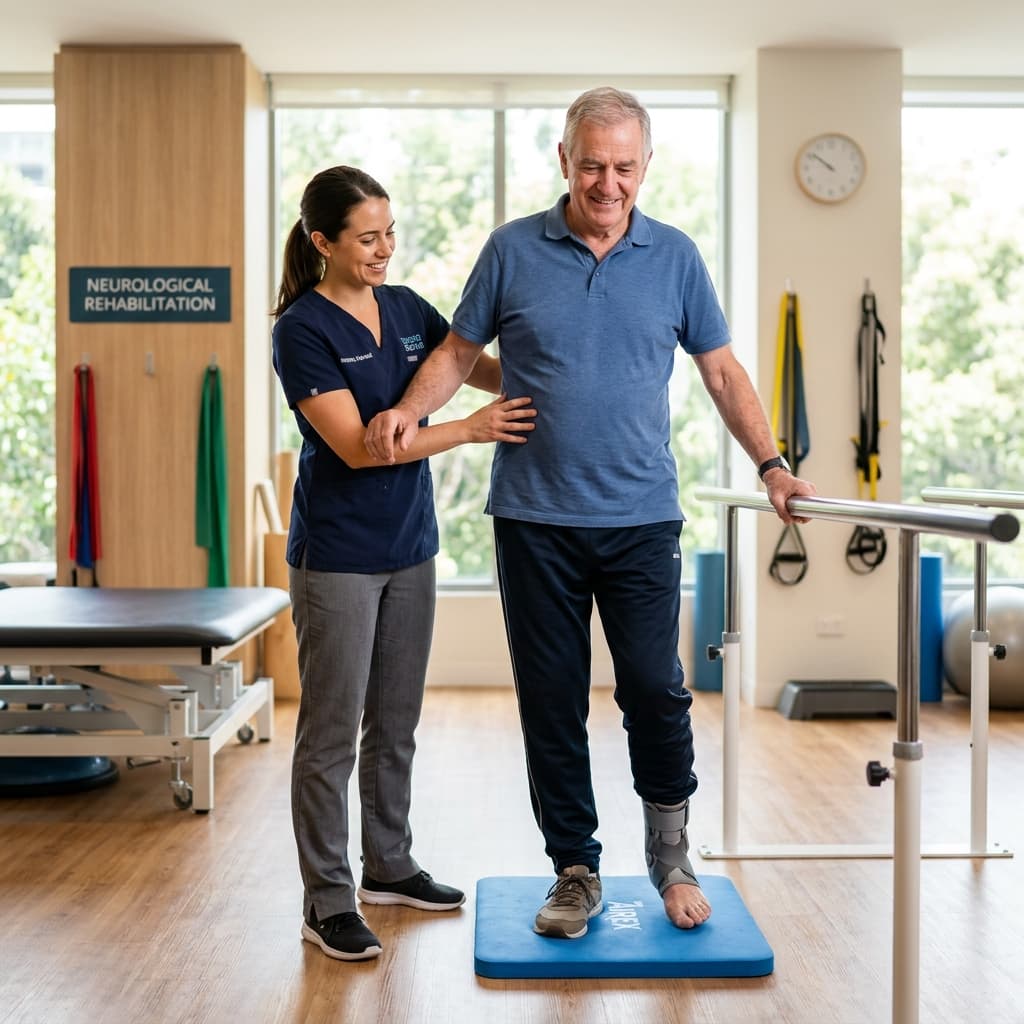
A physiotherapist can help you set safe starting points and increase the amount gradually, taking your balance, weakness and fatigue into account. Our guide on how often a stroke patient should do physiotherapy at home explains how to balance practice and rest, and our article on the first six weeks after a stroke shows what progress typically looks like.
Sleep and daily habits
- Keep regular times for getting up and going to bed.
- Limit long daytime sleeps. A short rest is fine, but long naps can disturb night-time sleep.
- Get daylight and some fresh air each day if you can.
- Avoid caffeine, heavy meals and alcohol late in the day. Check with your GP about alcohol, particularly with medicines.
- Drink enough fluid and eat regular meals.
- Tell your GP if you snore loudly, stop breathing at night or have restless legs, as these may need checking.
Look after your mood
Low mood and anxiety are common after stroke and can both cause and be caused by fatigue. Talk to your GP if you feel down most days, lose interest in things, or cannot stop worrying. Talking therapies and sometimes medicines can help. You are not being weak by asking.
How family and carers can help
- Believe them. Fatigue is invisible but real.
- Plan with them, not for them. Let them decide what matters most.
- Offer help with tiring chores such as shopping, cooking or phone calls, so they can save energy for rehabilitation and enjoyable things.
- Keep the home calm, with fewer visitors and quiet time in the day.
- Watch for changes. Tell the GP if tiredness suddenly worsens.
- Look after yourself. Carers get exhausted too. The Stroke Association helpline on 0303 3033 100 can offer support.
When to get urgent help
⚠️ New symptoms need a 999 call
Fatigue is common after a stroke, but sudden new symptoms are not. Call 999 straight away if you notice any signs of a new stroke: face drooping on one side, weakness in an arm or leg, slurred or confused speech, sudden loss of vision, or a sudden severe headache. The NHS stroke page lists the signs.
Speak to your GP or NHS 111 soon if tiredness suddenly gets much worse, you are very sleepy during the day, you have a new fever, chest pain, or you feel very low or hopeless.
How a physiotherapist can help with fatigue
A neurological physiotherapist can:
- Build a graded exercise plan that fits your energy levels
- Teach energy-saving ways to move, transfer and walk
- Work out the right balance of rest and activity across the week
- Treat stiffness or weakness that makes everything harder. See our guide on understanding and managing spasticity after a stroke.
- Coordinate with your GP and stroke team
Need help with a recovery plan that respects your energy? Book a stroke rehabilitation home assessment. The cost is £90 for 60 minutes, and no GP referral is needed.
This guide is general information, not personal medical advice. Always follow the instructions from your stroke team and GP.
Frequently Asked Questions
Yes. Fatigue is very common after a stroke and can affect people with mild or severe strokes. It is not laziness, and it is not something you can simply push through.
It varies. Many people see it ease over weeks to months, but some have it for longer. Pacing, planning, gentle exercise and treating other causes such as poor sleep or low mood can all help.
Both matter. Short rests help you recover, but too much rest can make you weaker and more tired. Start with small amounts of gentle activity and build up slowly, ideally with advice from a physiotherapist.
Yes. Some medicines cause drowsiness, and conditions such as anaemia, infections, thyroid problems, depression and sleep apnoea can add to fatigue. See your GP to check, and do not stop any medicine without advice.
Mention it at your next review, and see your GP sooner if it is getting worse, you are sleeping much more than usual or you feel very low. Call 999 if you have any new stroke symptoms.